Clocked
It occurred to me that I wasn’t completing as many games as I used to. Maybe in some ways this is down to a shift in the types of games I play. How do you complete an online multiplayer MMO for instance, or even a MOBA? I guess it depends a lot on what your criteria for completion is, or what you personally want out of a game. What did I actually want?
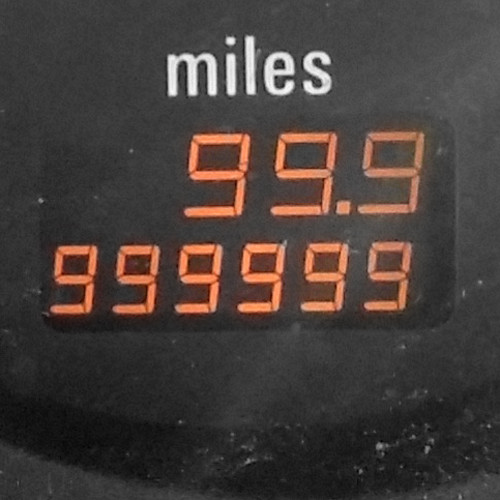
I tend to still call completing a game ‘clocking’, which in itself came from a time when games were simple and had repetitive style of gameplay, the only metric of skill coming from the high score table, and on some of these earliest of arcade cabinets (and pinball tables) they’d likely have limited bytes to store the score data and so the challenge was to see whether you could get the score back around to zero again (hence clocking). From my own perspective the only thing I had growing up that would fit that description was the Nintendo Game and Watch games, which had a max of 999*, of which I can officially say I’ve clocked Donkey Kong Jr more times than is healthy.
Anyway the term remains in my vernacular as a nice shorthand for completing a game. Growing up through the home computer and 8-bit era, you could say there was a degree of challenge and difficulty in games which is arguably missing from recent times. In part you can put this down to scope and the era in which they were released. Games were inherently smaller back in the day due to the memory and power of the machines they ran on, and some were direct clones of arcade games which by their design of replay to profitability had a nature of gameplay that was sometimes borderline unfair (I’m looking at you Ghouls ‘N Ghosts), and so possibly as a way of compensating and creating an artifice of length or to disguise the repetitive nature they’d ramp up the difficulty to 11.
The thing is this argument can be used for any period really, it’s just that back then it was felt a little more acutely. There were easy games back then too, and there were games that were considered hard for no other reason than they were simply unplayable, by which I mean poor controls, badly designed and in some cases just simply buggy. Three complaints that can just as easily be applied to games from the modern era.
You can argue that in general games these days are a lot easier to ‘clock’. In some cases I think this simply boils down to accessibility and trying to cater for a large spectrum of players. I think the scope and budgets especially with regard to the AAA titles has meant game designers have to make their product for a wider audience in order to maximise profitability and in doing so have to take some of the sting out of the tail. Balancing games becomes a juggling act between accessibility and challenge. Make it too easy and people complain they’ve wasted forty quid on something that took them a few hours to complete, make it too difficult and you risk not getting the sale in the first place. It’s why companies making these games are inherently conservative and once they hit upon a formula that works and shifts units they become unwilling to innovate or change.
Another argument is what defines completion of a game these days, especially with some open ended games. In a sense I suppose you could argue it depends mostly on what you want out of the experience. Specifically you could separate the argument into two distinct time periods in gaming history; Before Achievements and After Achievements.
Before Achievements was a time when the final boss really was the final boss. Sure some games teased you with secret areas and collectables, but what stands out from this time is that completion of the game, in its purest sense meant defeating that last foe and letting the credits roll. In a sense you’d beaten the game, you’d ‘clocked’ it, and you could happily enjoy watching the random names fill up the screen on top of cut scenes of gameplay and then move on to the next cartridge. There were exceptions, some games for instance offered you a harder challenge next time around, some in the late 90s had built in specific goals that were required to be met in order to 100% the game for the most fanatical of people, but for the most part you were done and could be content.
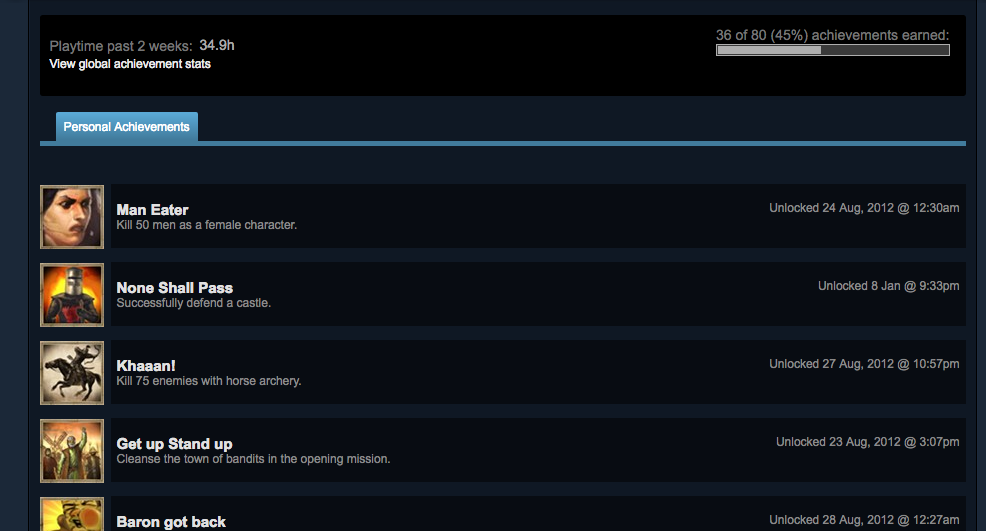
Around 2005 Microsoft rolled out a gamerscore system with the Xbox 360, and many other platforms have since rolled out similar systems. To begin with they started as rather basic things, beat level 1, complete the tutorial, but soon developed a life of their own. Some quantified a particular gameplay style (shoot a specific gun x amount of times), some were simply ridiculous, and a few were actually unobtainable. Some games were created simply as a means for achievement hunters to farm points. What these systems most did however was dilute what it meant to complete a game, to clock it so to speak. As an extension to the games that required you to find all the secret areas in order to 100% a game, this system added micro rewards to the mix, a measure of your achievement on a game, something you could compare, whereas the bread-and-butter of finishing the main quest became just another one of these notches to collect. In a sense this quantifying of goals meant that a game was never truly complete except when you decide yourself to move on, and that’s what you tended to do after a while.
And so the art of finishing the main quest became a rare prize in the age of achievement, and I realise how backwards that sounds. In a sense you can understand games trying to give you reasons for replay-ability, but when games are coming in at an unprecedented rate, how much time can you afford to spend whittling away at the achievement machine until you hit your own personal bang-for-buck ratio and move on to the next big release. Sure you may leave the odd ‘old’ game installed, as something to go back to, but chances are you never will, and on the rare occasion you find yourself wanting to, it’ll be so lost in your memory that you’ll have to start all over again, and then get to the same point you just reached before moving on once more, stuck in an endless loop. Rinse and repeat.
I’ve fallen into this trap so many times now, so I’ve decided to try and break the cycle. I’m running out of hard drive space for one thing, so I’m going to complete games. I’m going to keep the goals simple. For games with a linear storyline, end boss, credits roll, job done. For non-linear games it’ll be at the point where I feel Ive taken it as far as I can go, and once that happens I’ll pick an achievement to unlock which I’ll call the win condition. It seems a fair way to divvy up my time, and get over the backlog in both my console and steam libraries.

The other side of this is to go back to all those games BA (Before Achievements), the ones that I never finished. One of my most embarrassing gaming secrets was that I hadn’t completed Sonic the Hedgehog 2 until 2012. Oh sure I’d been to the final level a number of times, but never had I actually defeated Robotnik’s final form (without cheating, that super sonic thing was just too much fun). It was such a sense of raw elation when I finally managed it and it’s that feeling which drives me now to want to get things done, to put games to bed.
Also from the 8 and 16 bit era, there are one or two games I really think I should have ticked off the list. Super Mario Bros 3 for instance (which I never owned before so there’s at least an excuse, though I did grab it for the Wii), and now that I think about it I don’t think I’ve ever completed the second one either. Chrono Trigger has been waiting to be completed for a while now also. Cannon Fodder for that matter sticks out as something I never quite finished.
Of the key titles I have in mind over the next few weeks Skyward Sword is a particular bug-bear. This one got lost in time (no pun), I moved house and never really set the Wii back up properly and then other games took prominence, which also reminds me that Xenoblade Chronicles needs a do over too, in fact I really have a handful of wii games that need a proper look.
I also dusted off my 360 the other day and GTA 4 was finally clocked yesterday (with the somewhat tongue-in-cheek “You Win!” achievement). I’m going to start over on Red Dead Redemption next, especially since they’ve recently teased a sequel. On the Wii U front I’ve also got Bayonetta 1 and 2 to do. (Will be third time around for Bayonetta 1, got part way through on 360, repurchased for the Wii U as part of the double pack and I feel I need to do it justice before playing the sequel) On PC there’s The Witcher series, and all those great reviews of Witcher 3 are really nagging me to finish the first and second one.
As reasons to play old games go I’d say I don’t really need one as being a fan of retro games I would anyway, but as a motivating factor this will at least give me more impetus to retrospectively run over a few oldies that I feel haven’t quite had their fair dues. I may even write about them (no promises).
—
* I recall that the game and watch series also had what I affectionately remember as 300 mode, whereby if you made it to 300 points without losing a life, the game got harder but you got double points. Maintaining that mode for a ‘clock’ was a challenge in itself.