
Wasteland Revisited: Modding the Mojave part 1
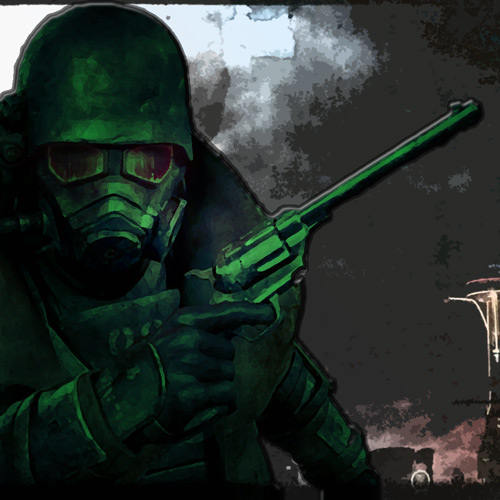
It seemed very apt timing that I started a game of Fallout: New Vegas about a week before Valve and Bethesda managed to piss off the entire internet with an ill conceived land grab at the mod community of Skyrim. Their paid mod idea burning to the ground amid a swathe of angry netizens seething at the prospect of a price tag being placed on what was once free, calling out the modders who were removing their content from sites such as nexusmods to place behind this so-called pay wall, accusations of thievery amid a community built on the foundation of collaboration and friendship. In all it was a bit of a clusterfuck.
I can sort of see what Valve was thinking though (even if the method and delivery was somewhat shockingly mishandled, and even the choice of game somewhat misguided). They come from a good pedigree of monetising community content to the benefit of all parties with CS:GO and Team Fortress 2, and as some of the greatest mods available to date are aimed at Bethesda’s games (and by extension Obsidian’s Fallout game) its reasonable to think that at some board level meeting somewhere a lightbulb went off and dollar signs appeared.
Here was a community creating great content for games, why not get everyone a taste of the spoils? And let’s face it there are some mods out there for these games that if they were a retail release you probably would spend money on them, they are genuinely that good, perhaps not as polished as a studio release but getting very close. On the other hand though supporting these mods, compatibility issues, updates, and dare I say it the issue of refunds are some of the most obvious pitfalls.
No-one is going to pretend that Valves’ support sysytem these days isn’t anything other than lip service (frankly they’re too big now for it to be anything more), and modding Skyrim in particular isn’t an easy thing, either for the modders themselves or the people who use their wares. Never has the phrase “your milage may vary” been so succinct as it is to that game (and to fallout 3 and NV) with regard to mods due to the complexity of these games and variances in people’s setups. Did valve really want to be the gatekeeper and support system for third party mods for a game that isn’t even their own?
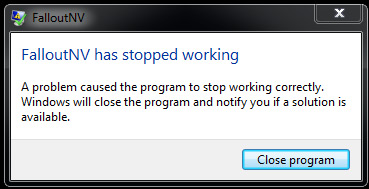
Booting up a game with mods is not without its pitfalls and trial by error
Whilst it may be easy for Valve to slurp up a number of popular cs maps into a community pack (tried and tested openly by the players themselves to weed out any bugs), or set up a weapon skin crate, the sheer number of potential pitfalls (of mods not working together, load order, etc) means it’s an exercise in folly to monetise mods for skyrim without a decent level of curation, and frankly without going into the quality of the initial mods offered in the payed for pack, this seems to be the biggest flaw in this project, and what inevitably killed it only a few days into the exercise.
They will no doubt try again, likely as not with Bethesda’s next big rpg game, though obviously they burnt a lot of good will in the community in a matter of days this time round, it’s not to say a measured and planned approach taken at baby steps may actually be better received next time, but the infrastructure needs to be in place, including a more solid mod install, as at present its a trial by error approach that would simply be unpalatable to a mass audience.
Wasn’t this about Fallout: New Vegas?
So I started a game of New Vegas a few weeks back. I don’t know why, sometimes I just like a little bit of casual escapism in my game roster (between marathon sessions of Lol and CS:GO), and well I wasn’t sure if I’d totally done it justice the first time round.
The reason this is linked to the opine above on mods is because I remember my first playthrough of New Vegas to be somewhat underwhelming. I played on survival mode which to me is a perfect setting for these games, and I never quite understood why it wasn’t an option in Fallout 3 by default, so after grabbing a similar mod for FO3 I was pleased it was added to New Vegas. It wasn’t so much the gameplay that underwhelmed though, but the bugs inherent in it. I think it was an actual bug with a bug (anyone familiar with the game will know of the dreaded poisonous Cazadors, a nasty massive wasp like creature that just doesn’t know when its not welcome). Essentially in Vanilla New vegas on Survival what used to happen was if you were stung by a calzador and used a stimpack you’d drop down dead. It was a small thing but in the grander scheme of things really narked me (Im a light saver in these games as a way to try and discourage reloads aside from a nervous F5 quicksave tick I developed moving from area to area from the Oblivion days, crash to desktops and all that jazz). So after exploring the wastes and getting my two pennys worth (or should that be nickels worth -ed) I gave up. There were other things too though, the odd balance issue, some quests I thought were sloppy, it felt like Obsidian had rushed it out the door, but overall it was a reasonable game and I gave it its due.
I did think it could have been better though, and thankfully some people with more skill also agreed and created some excellent mods for it that solve a lot of the original issues I had with the game as well as adding new features and content. So I’ve started over. I’ve just had a run through as a standard scientist, lockpick, sniper on survival. It was a lot of fun.
The main difference this time round was the installation of a mod called Project Nevada. It’s simply a brilliant overhaul of the game and easy to miss how fundamentally obvious some of its tweaks are; Bullet time, a sprint function, grenade key, plus a range of other tweaks and balances that make you wonder how on earth they weren’t included in the base game in the first place. Going back to the point earlier about paid mods, I think I would pay for this one without a shadow of a doubt. It improves the game on so many levels one wonders how Obsidian missed them out in the first place.
Another mod I installed for this play through was Nevada Skies, which adds weather effects to the game. Again it’s hard to explain but a simple thing such as weather can make all the difference in immersion factor in an RPG. The game just felt so much better with this on.
I also found an invisible wall remover. This is a particular bug-bear I have with games on this engine. Half the fun comes with the exploration in these games and having your progress hampered (even on flat terrain in some cases) by invisible walls placed either to keep a player in the bounds or simply accidentally left as a bug. It’s inexcusably sloppy, and a product of the expansive map and short QA, but thankfully theres a mod that fixes it.
In fact there’s a mod out there that fixes pretty much everything or adds new content, or upgrades textures, changes your character into a super mutant, etc. It’s a fine credit to the openness of the games these mods support and to the community that builds up around them to play in the sandboxes that these are allowed to exist.
Now there’s two ways mods can go in the future. Developers will either passively allow them, releasing tools such as the G.E.C.K for their games allowing new avenues of gameplay and continually improve the experience for their customers, or their publishers will encourage the developers to shut up shop, to monetise with their own dlc, release limited if any mod support. A close example would be the Call of Duty series past Modern Warfare, the loss of private servers ultimately leading to the loss of mod support as the focus shifted to consoles. The fact is though people will still try and mod the games anyway.
Without these mods however would I have revisited a five year old game that I quickly grew tired of? Probably not.
So is revenue sharing for mods going to work? Will people accept paid for mods as quickly as they accepted paid for DLC? Will quality of work be the deciding factor with the market deciding the price? I honestly don’t have the answer. For every Project Nevada there’ll be another guy flogging a knife skin at an exorbitant price, or ripping off another developers work and selling it as their own. I’m all for mods that grow out of their original scope (Black Mesa seems to be an obvious one currently) which go on to be a commercial prospect, but I just don’t know whether a modding community that builds around a game, openly sharing ideas and scripts for the betterment and love of the game will accept profiteering (even if it’s justified by the quality of work), as I genuinely don’t know how you’d best compensate such a community, or whether even the act of costing these mods would take some of the love out of it and turn it purely into a numbers game for the mod developers.
I suspect Valve and Bethesda’s experiment won’t be the last time this is tried, and who knows they may stumble upon a workable solution (one that isn’t hurried out in 45 days, with zero curation, Im looking at you Valve), but I suspect having their fingers burned at the first hurdle will make them and others looking at this monetary stream a little more cautious in future.